Complaints Procedure for Landscaping Services
 A clear complaints procedure for landscaping services helps set expectations, protect trust, and resolve issues in a fair and orderly way. When a customer believes that a job has not been completed properly, a plant has failed, a surface has not been installed as agreed, or the site has been left in an unsatisfactory condition, there should be a simple path to raise the matter. A well-structured process is not about arguing a case; it is about identifying the concern, reviewing the facts, and finding a practical solution.
For any landscaping complaints process, the first step is always to understand the nature of the issue. Some concerns are minor and can be corrected quickly, while others may involve design choices, material differences, or weather-related effects. By separating factual problems from expectations, the procedure becomes more balanced and easier to use. This approach also supports professionalism, because it shows that concerns are taken seriously from the start.
In landscape services, complaints may relate to planting, turfing, paving, fencing, edging, drainage, or general site finish. A proper process should explain how complaints are recorded, who reviews them, and how decisions are made. It should also make clear that any review will be based on the original scope of work, agreed standards, and the condition of the site at the time the work was completed.  This prevents confusion and keeps the focus on facts rather than assumptions.
A good landscaping grievance procedure normally begins with written notice of the concern. The issue should be described clearly, with details such as the affected area, the date the work was completed, and what outcome is being requested. Where useful, photographs or notes may be included. This stage helps ensure the problem is understood accurately and gives the business a fair chance to review the matter without delay.
The next stage is assessment. The complaint is checked against the job specification, site conditions, and any relevant completion notes. In many cases, the issue can be resolved by a correction, adjustment, or return visit. In other cases, there may be a need to explain why a result has occurred, especially where seasonal changes, soil movement, or weather conditions have affected the landscape. A transparent process creates a stronger basis for resolution and avoids unnecessary disagreement.
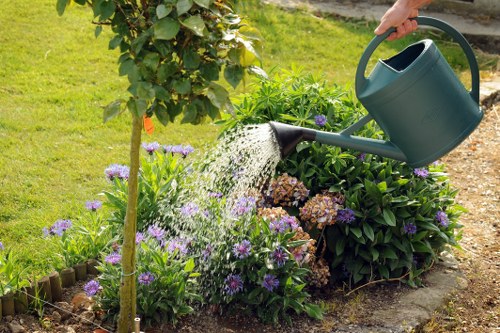 If the complaint is more complex, the review may involve a more detailed inspection. For example, if a lawn is patchy or a planted border is underperforming, the cause may be linked to watering, soil quality, timing of planting, or site exposure. A careful landscaping dispute procedure looks beyond the visible symptom and considers the wider context. This is especially important because outdoor environments are influenced by natural factors that are not always predictable.
Once the facts have been assessed, a decision should be communicated in a clear and respectful way. The response should explain whether the complaint is accepted, partially accepted, or declined, and it should outline the reasons. If a remedy is offered, the details should be specific, such as a repair, replacement, re-seeding, or further adjustment. Where a complaint cannot be upheld, the explanation should be calm, factual, and easy to understand. Strong communication reduces frustration and builds confidence in the process.
It is also helpful to define timescales for response and resolution. Customers benefit from knowing when they can expect an update, and the service provider benefits from having a structured framework. A landscaping complaints policy should avoid vague language and instead use realistic timeframes for acknowledging a complaint, carrying out a review, and confirming the outcome. This ensures that the process remains efficient without rushing important checks.
In some cases, a complaint may involve a recurring issue or a disagreement about responsibility. For example, a feature may have been altered after handover, or the site may have changed due to use, maintenance, or external conditions. A fair procedure should distinguish between defects in workmanship and issues caused by later events. This distinction matters because it helps ensure that responses are reasonable and proportionate.  It also supports consistent decisions across different projects and situations.
Documentation is a key part of any landscaping complaints handling system. Records of the original brief, site notes, photos, review findings, and final decisions should be kept together. These records support accountability and help prevent the same issue being revisited without new information. Good records also make it easier to identify patterns, such as repeated concerns about a specific type of material or method, which can then be improved over time.
Fairness and professionalism should remain central throughout the process. Even when a complaint cannot be resolved exactly as requested, the tone of the response matters. A constructive approach shows that the concern has been listened to and evaluated carefully. This is especially important in landscape work, where results are often visible and personal, and where expectations can be shaped by design preferences as much as by technical standards. A calm, structured process helps keep discussions productive.
 A final stage should confirm closure. Once the complaint has been addressed and any agreed action completed, the matter should be marked as resolved. If further information is needed later, the earlier records will help provide context. A clear end point is valuable because it gives both sides confidence that the issue has been dealt with properly. In this way, a landscaping service complaints procedure supports quality, trust, and consistency without unnecessary complexity.